The Effortless Lie: What the 'No-Try' Aesthetic Actually Costs You
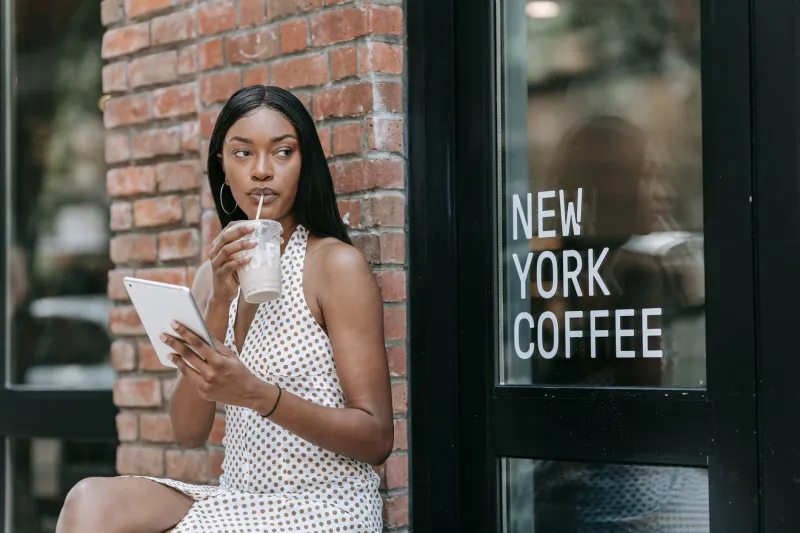
There's a particular kind of woman we're all quietly obsessed with. She's wearing linen trousers that somehow aren't wrinkled, a barely-there white tee that fits like a whisper, and shoes that look expensive without being flashy. Her hair is doing something loose and intentional at the same time. She looks like she got dressed in four minutes and hasn't thought about it since.
She is, of course, lying.
Not maliciously. Not even consciously, maybe. But the aesthetic she's projecting — the one that whispers I just threw this on — is one of the most carefully constructed, financially demanding looks in the entire fashion landscape. And we've been so seduced by the mythology of effortlessness that most of us haven't stopped to ask: what does it actually cost to look like you're not trying?
The Price of Looking Undone
Let's start with the basics. The "no-effort" wardrobe is built almost entirely on quality basics — and quality basics are expensive. That perfectly draped white tee? The ones that photograph well, don't go sheer in sunlight, and hang just right off the shoulder? You're looking at $80 from Everlane on a good day, closer to $150 from James Perse, and north of $300 if you're shopping the French labels that pioneered the whole aesthetic in the first place.
The linen trousers. The cashmere crewneck that looks like you borrowed it from someone taller. The leather loafers that look worn-in but not worn-out. Every single piece in the effortless wardrobe is a considered investment. The whole thing only works because the fabrics are exceptional, the cuts are precise, and the construction is the kind that holds up wash after wash without losing its shape.
Budget alternatives exist, sure. But here's the cruel irony: cheap basics look cheap in exactly the way that cheap statement pieces don't. A $20 sequin top can read as intentional camp. A $20 white tee just looks like a $20 white tee. The effortless aesthetic has no tolerance for visible compromise.
Curation Is a Full-Time Job
Beyond the individual price tags, there's the hidden cost of curation. The women who nail this look aren't just buying expensive basics — they're editing relentlessly. They know which specific shade of beige works against their skin tone. They've tried seventeen versions of the "perfect straight-leg jean" and kept two. They understand the difference between a coat that's oversized in the right way and one that's just big.
That kind of knowledge doesn't come free. It comes from years of shopping, trying, returning, donating, and starting over. It comes from the financial ability to experiment — to buy the $200 loafer, decide it's not quite right, and keep looking. The effortless wardrobe is the end product of an extremely effortful process that most people can't afford to run on repeat.
And then there's the maintenance. Cashmere needs to be hand-washed or dry-cleaned. White linen needs to be pressed or steamed. Leather shoes need conditioning. The low-key wardrobe requires a surprisingly high level of upkeep to stay in its pristine, "I just grabbed this off the chair" condition.
The Influencer Industrial Complex
Social media has made all of this worse, obviously. The effortless aesthetic has been co-opted and commodified to the point where it's practically its own genre — and the women selling it to us are operating with resources most of their audience will never have.
When an influencer posts a "casual Sunday" photo in $400 straight-leg jeans, a $180 linen shirt, and $600 clogs, and captions it "nothing special, just getting coffee," she's not lying about her intentions. She probably does feel casual. But she's also working with a wardrobe budget that functions more like a professional styling budget than a personal one. The brands sending her pieces. The partnerships. The tax write-offs. The access.
The aspirational fantasy she's selling — this could be your low-key life — is technically true, if your low-key life comes with a significant disposable income and a few free afternoons a week to think about clothes.
So Is Effortlessness Actually Accessible?
Here's where it gets interesting, and a little more hopeful. True effortlessness — the real version, not the Instagram version — isn't actually about price point. It's about fit in the broadest sense of the word.
When a piece fits your body, your lifestyle, and your actual personality, you stop fussing with it. You stop second-guessing it. You reach for it automatically and feel good every time. That experience is genuinely available at every price point, but it requires a different kind of investment: self-knowledge.
Knowing what silhouettes actually work on your body (not the ones you wish worked). Understanding which colors make your face look alive versus flat. Recognizing the difference between a trend you genuinely love and one you're chasing because it's everywhere. That knowledge is free — but it takes time, honesty, and a willingness to stop shopping aspirationally and start shopping for who you actually are.
The woman who looks effortlessly great in a $35 Target tee and her favorite jeans has done the work of figuring herself out. She's not performing casualness. She's just dressed.
Rewriting the Rules of Pretty
The effortless aesthetic, at its best, is a rebellion against the idea that style has to be loud to be legitimate. It says: I don't need to try hard to be worth looking at. That's a genuinely beautiful message, and one worth holding onto.
But we do ourselves a disservice when we accept the fantasy version — the one that pretends the $900 outfit was an afterthought, that the careful curation didn't happen, that beauty at this level just falls out of the sky onto people who are simply cooler than the rest of us.
The authenticity tax is real. Looking like you're not trying often costs more than looking like you are. And acknowledging that — clearly, without apology — is the first step toward building a style that actually works for your life, your budget, and your body. Not the life, budget, and body the algorithm keeps suggesting you should have.
The prettiest thing you can wear is something you chose on purpose. Even if it looks like you didn't.