You Look Better in Real Life: What Happens When You Stop Dressing for the Camera
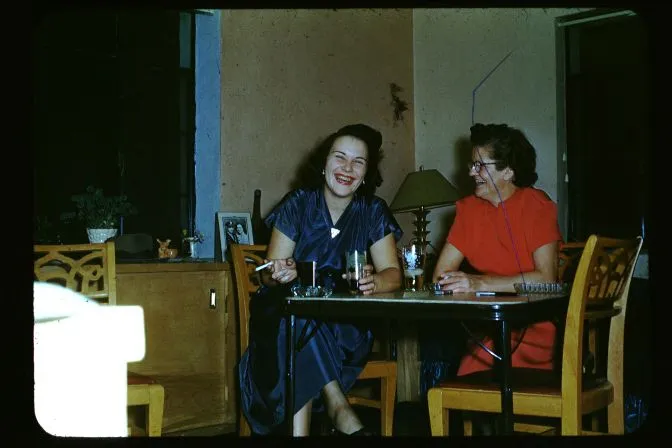
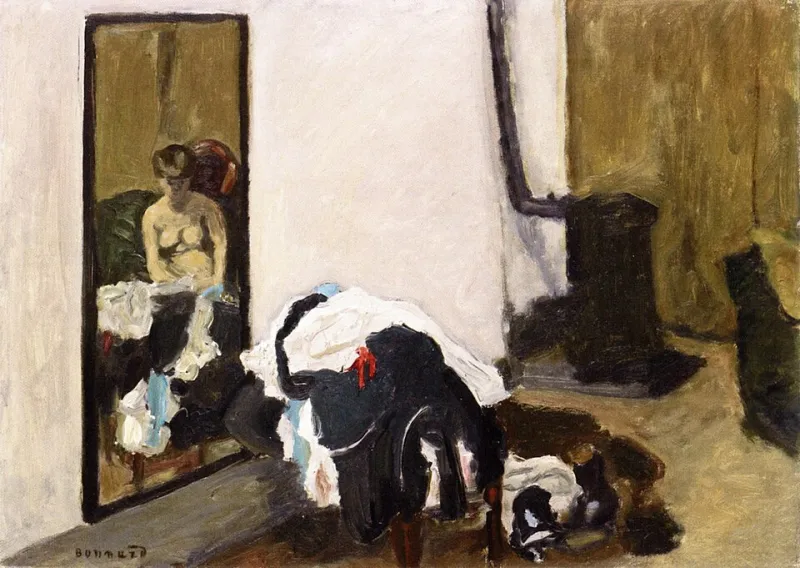
Photo: Unknown, No restrictions, via Wikimedia Commons
The Mirror Lies. The Camera Lies Differently.
We've all done it. You try on something that feels a little off — the proportions aren't quite right, the fabric is doing something weird when you walk — but then you take a photo and it looks incredible. Suddenly the outfit is saved. You buy it, you wear it, and every time you have it on, something nags at you. You feel slightly costumed. Slightly not yourself.
Here's what's happening: a camera flattens, compresses, and edits reality in ways your actual body moving through actual space does not. A structured blazer that photographs like a fashion editorial might make you feel stiff and overdressed at brunch. A flowy maxi skirt that reads as boho-chic in a mirror selfie might bunch awkwardly when you sit, bunch again when you stand, and spend the entire dinner requiring management. The photo captured one still, carefully angled second. Your life is not a still, carefully angled second.
We've quietly, gradually started dressing for documentation rather than experience. And it's worth asking — at what cost?
The Instagram Outfit vs. The Outfit That Actually Works
There's a category of clothing that exists almost entirely for content. You know the pieces: the color-saturated co-ord set that looks unreal against a white wall, the sculptural bag that photographs like a prop, the barely-there dress that gets a thousand likes and requires constant adjustment. None of this is inherently wrong. But when most of your wardrobe falls into this category, something has gone sideways.
The outfits that genuinely serve you are the ones that feel good in motion. They hold up in fluorescent lighting and natural light and the dim interior of a restaurant. They look right from across a room, not just from a phone held at arm's length above your head. They don't require a specific backdrop to make sense.
Think about the last time someone told you that you looked amazing — not in response to a photo, but in person, in the middle of an ordinary day. What were you wearing? Chances are it wasn't your most photographable outfit. It was probably something that fit your body well, moved naturally, and made you carry yourself with the ease that comes from not thinking about your clothes at all.
That ease? That's the whole thing.
The Unflattering Photo as Useful Data
Here's a reframe that might feel uncomfortable at first: the candid photo that catches you off guard is actually your most honest styling feedback.
Not the selfie you took seventeen times to get right. Not the posed shot from the blogger meetup. The one your friend snapped while you were laughing at something, or the photo from a family event where you weren't thinking about your angles. That photo tells you what your clothes are actually doing when no one — including you — is curating the moment.
If you look at that photo and cringe, it's worth asking why. Is it the outfit? Or is it just the unfamiliarity of seeing yourself unposed? There's an important distinction. Many of us have deeply internalized the idea that we need to be photographed correctly in order to look good, when in reality, the clothes that make you feel most like yourself tend to look best in those unguarded moments too.
Try this: next time you're getting dressed, ask yourself how the outfit feels when you're walking, sitting, talking with your hands. Does it still feel like you? Or does it only work when you're standing still at a specific angle with your weight shifted to one side?
Why the Most Elegant Outfits Don't Need a Filter
There's a reason certain women always look pulled-together in candid shots. It's not luck, and it's not good bone structure. It's that they've figured out — consciously or not — how to dress in a way that translates across contexts. Their clothes fit in the truest sense of the word: not just at the seams, but to their lives, their movements, their actual aesthetic.
This is the quiet luxury principle applied beyond price point. An outfit that looks expensive and intentional in every setting — the grocery run, the work meeting, the impromptu dinner — is doing something that a carefully curated content outfit simply isn't. It's working for you rather than requiring you to work for it.
Neutral doesn't mean boring here. A woman in a perfectly fitted pair of wide-leg trousers and a simple silk blouse will look more consistently stunning across a hundred candid photos than someone in a maximalist printed set that photographs beautifully in one very specific light. Fit, fabric, and proportion do the heavy lifting that filters and angles are compensating for.
A Practical Audit: Does This Outfit Actually Serve You?
If you want to start dressing more for real life and less for your grid, here are a few honest questions to run through before committing to a piece:
Does it feel good to move in? Walk across the room. Sit down. Reach for something above your head. If you're adjusting or bracing, that's information.
Would you wear it somewhere there are no photos? A long drive, a low-key hangout at a friend's apartment, a day when your phone stays in your bag. If the answer is no, consider why.
Does it look like you, or does it look like a version of you performing style? There's a difference between clothes that express who you are and clothes that express who you want people to think you are. The former feels like a second skin. The latter always feels faintly like a costume.
How does it look in bad lighting? Unflattering overhead fluorescents are the great equalizer. If an outfit only works in golden hour, it's working harder than it should have to.
Dressing for the Life You're Actually Living
None of this is an argument against caring about how you look in photos, or against enjoying a well-composed outfit shot. Fashion is visual, and sharing it is genuinely fun. But when the camera becomes the primary audience for your wardrobe decisions, you start optimizing for a two-dimensional version of yourself — and the three-dimensional one, the one who has to actually live in those clothes, starts to get shortchanged.
The prettiest thing you can wear is an outfit that makes you forget you're wearing it. The one that earns you a compliment while you're mid-conversation, not mid-pose. The one that shows up in the background of someone else's photo and still looks exactly right.
That's the real test. And it has nothing to do with your camera roll.