The Freedom of Limits: How a Personal Style Rulebook Sets You Free
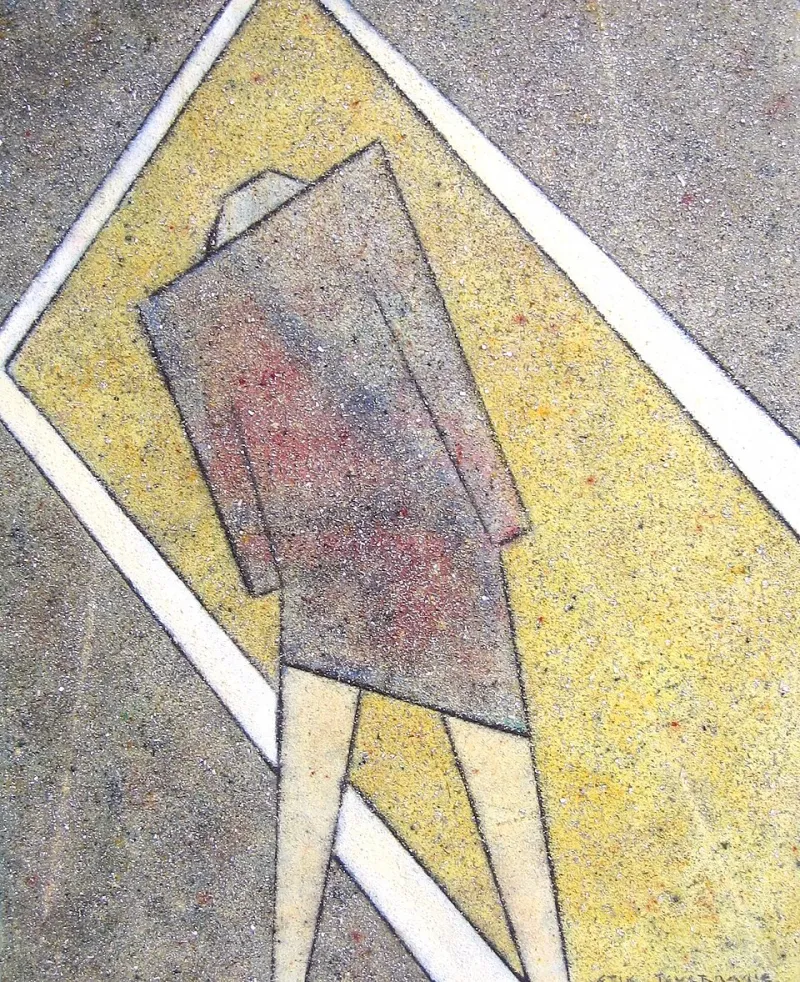
Photo: Erik Pevernagie .mw-parser-output .messagebox{margin:4px 0;width:auto;border-collapse:collapse;border:2px solid var(--border-color-progressive,#6485d1);background-color:var(--background-color-neutral-subtle,#fbfcff);color:var(--color-base,#20212
Here's a thought experiment: imagine opening your closet tomorrow morning and finding that half of it had simply vanished. Gone — the impulse buys, the wrong-shade neutrals, the pieces you keep meaning to donate. What's left is a tightly edited collection of things that actually work together, that fit your body and your life, that feel unmistakably you.
For most of us, that sounds like a nightmare. But for a growing number of fashion-forward women, that scenario is the whole point.
Constraint, it turns out, might be the most underrated style tool in existence.
Why Your Brain Hates Your Closet (Even When It's Full)
There's a well-documented psychological phenomenon called decision fatigue — the idea that the quality of our choices deteriorates the more decisions we're forced to make. It's why President Obama famously wore the same style of suit every day, and why Steve Jobs lived in his black turtleneck. They weren't lazy. They were conserving cognitive energy for the things that actually mattered.
Now apply that to your morning routine. If your closet contains 200 pieces in 15 colors spanning three decades of trend cycles, your brain is running a low-grade stress program before you've even had coffee. Every outfit decision becomes a micro-negotiation between who you were, who you want to be, and who you actually have time to be today.
Neuroscientists call the overwhelm that comes from too many options the "paradox of choice" — a term popularized by psychologist Barry Schwartz. His research showed that more options don't make us happier or more satisfied with our decisions. They make us more anxious, more second-guessing, and ultimately less decisive. Sound familiar?
The antidote isn't a 30-piece capsule wardrobe (we've already had that conversation). It's something more personal, more lasting, and honestly more interesting: a self-imposed style constraint.
What a Style Constraint Actually Looks Like
A style constraint isn't a uniform in the literal sense — you're not wearing the same outfit every day (unless you want to, which, respect). It's more like a personal editorial policy. A set of rules you've written for yourself that eliminates entire categories of decision-making before you even open your closet door.
Those constraints can take a lot of different forms:
A defined color palette. Maybe you've decided your wardrobe lives in the world of camel, cream, rust, and black. Everything you buy has to speak that language. Suddenly, getting dressed is less about "what goes with what" and more about choosing the mood within a palette you already love.
A silhouette signature. Some women are all tailored trousers and structured blazers. Others live in flowing midi skirts and relaxed knits. When you know your silhouette, you stop trying on trends that were never designed for your body or your energy.
A fabric philosophy. Natural fibers only. Nothing that wrinkles. Exclusively deadstock or secondhand. Whatever the rule, it creates a filter that does the heavy lifting of editing before you ever pull out your wallet.
A vibe restriction. This one's softer but just as powerful — maybe you've decided your aesthetic is "downtown art teacher" or "uptown minimalist" and you measure every potential purchase against that identity. Does this fit the story? No? Back on the rack it goes.
Real Women, Real Rules
Think about the women whose style you admire most. Chances are, there's a consistency to them — a thread that runs through every outfit whether they're at brunch or a gallery opening or a Tuesday at the office.
That consistency isn't accidental. It's the result of knowing themselves well enough to have drawn some lines.
Fashion designer Vera Wang has spoken about her lifelong devotion to black — it's not a trend for her, it's a foundation. Minimalist architect-turned-designer Eileen Fisher built an entire brand around the constraint of simple shapes and natural materials. And on a less rarefied level, plenty of everyday stylish women have quietly developed their own versions of this: the friend who only buys vintage, the colleague whose entire wardrobe is some variation of a wrap silhouette, the influencer who's made "all neutrals, all the time" her entire personality (and a very compelling one at that).
What these women share isn't a lack of imagination. It's the opposite. By eliminating the noise, they've given their actual style instincts room to breathe.
Constraint as Creative Catalyst
Here's the part that surprises most people: limits don't flatten your creativity. They focus it.
Ask any artist, writer, or designer and they'll tell you that the blank canvas is often the most terrifying thing in the room. Structure gives creativity somewhere to push against. Constraints force you to be inventive within a defined space rather than paralyzed by infinite possibility.
When your palette is locked in, you start noticing texture. When your silhouette is set, you experiment with proportion. When fabric is your filter, you become genuinely knowledgeable about quality in a way that changes how you shop forever. The constraint doesn't shrink your style — it deepens it.
This is exactly why so many fashion editors and stylists who spend their professional lives surrounded by every possible option still gravitate toward a personal uniform. They've seen the paradox of choice up close and they've made their peace with it.
How to Find Your Constraint
The tricky part is that your constraint has to be genuinely yours — not borrowed from a trend, not copied from someone whose life and body and aesthetic are completely different from your own.
Start by looking backward before you look forward. Pull out the pieces you've worn most over the last year — the ones you reach for on autopilot, the ones that make you feel like yourself the moment you put them on. What do they have in common? Color? Cut? Fabric? Mood?
Then look at the pieces you never wear and ask yourself why, honestly. Is it because they don't fit the unspoken rules you've already been operating by without realizing it?
Your constraint is probably already there. You just haven't named it yet.
Once you do — once you say "I'm a warm neutrals and natural fabrics person" or "my silhouette is always oversized on top, fitted on the bottom" — something shifts. Shopping becomes more purposeful. Getting dressed becomes faster. And your style, freed from the chaos of infinite options, starts to look exactly like what it always was trying to be: distinctly, confidently, beautifully you.
The Prettiest Thing You Can Wear Is Certainty
There's a reason the most stylish people in any room tend to look like they made exactly zero effort. It's not that they didn't care — it's that they cared enough to do the work upfront. They established their rules, built their wardrobe around them, and now getting dressed is less a daily crisis and more a daily ritual.
Limits, it turns out, are a love language. The ones you set for yourself say: I know who I am. I know what I love. And I'm not here to waste either of our time.
That's not restriction. That's style.