When Clothes Fit Too Well: The Case Against Obsessive Tailoring

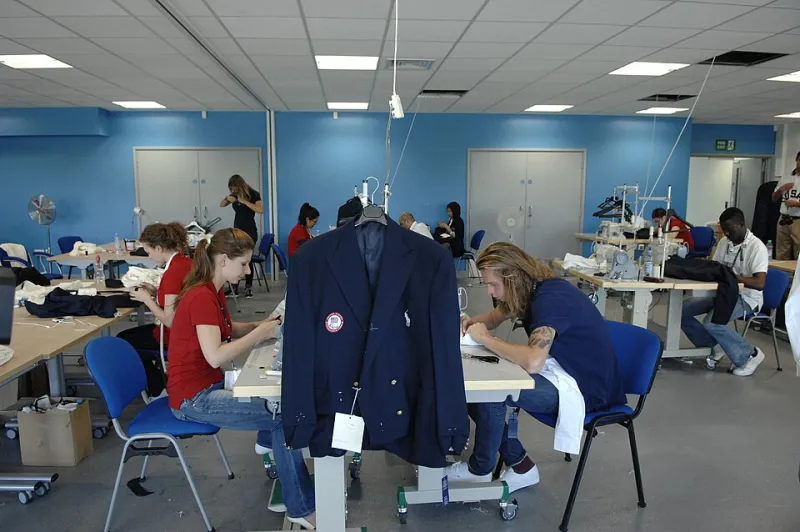
Photo: Shixart1985, CC BY 2.0, via Wikimedia Commons
There's a certain kind of style advice that gets repeated so often it starts to feel like gospel. Get everything tailored. If it doesn't fit perfectly, it doesn't work. And look — there's real truth in there. A blazer that actually hits your shoulder seam correctly? Transformative. Trousers hemmed to the right break? Chef's kiss. Nobody is arguing against the basic principle that clothes should fit your actual body.
But somewhere between "get your hems done" and "obsessively alter every single garment until it's millimeter-perfect," something goes sideways. The pursuit of the perfect fit can quietly kill what makes an outfit actually interesting — and more importantly, what makes it wearable in real life.
Let's talk about that.
The Tailoring Trap
Here's what happens when you chase precision fit above everything else: your clothes stop moving. Literally. A blazer taken in too aggressively across the back will pull every time you reach for something. A dress nipped at the waist with zero ease will make sitting down feel like a small act of defiance against your own wardrobe. You spend the day tugging, adjusting, holding yourself in a slightly unnatural posture — and somehow you thought this was the path to looking effortless.
There's also a visual problem. Clothes that are extremely fitted tend to flatten texture and drape. That beautiful silk blouse loses its fluid quality when it's been structured into submission. The oversized linen blazer you bought because it looked so cool and relaxed on the rack? Once you've had it taken in at every seam, it's just... a blazer. The thing that made it special is gone.
Perfect fit, paradoxically, can make you look like you're trying too hard. It signals effort in a way that actually undercuts the ease you were going for.
What "Good Fit" Actually Means
Here's the reframe: fit isn't about elimination of extra fabric. It's about intention. The question isn't "how close can I get this to my body?" — it's "how does this garment want to move, and am I working with that or against it?"
A great-fitting pair of wide-leg trousers has ease built in. That ease is the point. It creates the long, sweeping line that makes the silhouette work. Tailoring those trousers into a slimmer fit doesn't improve them — it removes the whole architectural logic of the design.
Same goes for an oversized coat, a drapey wrap dress, a boyfriend-fit denim jacket. These pieces are designed around space. The volume is doing something. When you alter it away, you're not refining the garment — you're fighting its DNA.
The most elegant dressers understand this distinction intuitively. They know which elements of a piece need precision (shoulders, length, waistband placement) and which elements need to breathe. They're editing, not over-correcting.
The Body-Movement Problem Nobody Talks About
Let's get practical for a second, because this is where obsessive tailoring really falls apart in daily life.
You are not a mannequin. You sit down, you reach up, you hug people, you carry a tote bag on one shoulder for three hours straight, you eat lunch. Your body moves through space in a thousand small ways, and your clothes need to accommodate that movement without turning the whole day into a wardrobe management project.
Clothes with some ease built in — whether that's intentional drape, a relaxed cut, or just a little extra room in the right places — actually look better in motion. They settle back into place. They don't gap, pull, or ride up. You forget you're wearing them, which is honestly the highest compliment you can pay to an outfit.
That forgetting is what people often mistake for effortlessness. It's not that the person across from you at dinner looks like they rolled out of bed looking incredible. It's that their clothes are working for them, not demanding constant management. There's a big difference.
Personality Lives in the Imprecision
There's something else that gets lost in the pursuit of the perfect fit: character. The slight oversizeness of a vintage blazer. The way a slightly-too-long skirt grazes the top of your shoes. The soft drape of a shirt that wasn't designed to be tucked in but you tucked it in anyway, a little messily, and it looks incredible.
Some of the most iconic style moments — think of the way women in the '90s wore men's suits, or how the current "borrowed from the boys" trend keeps cycling back because it genuinely works — are built entirely on deliberate imprecision. The clothes aren't fitted to the body. The body is wearing the clothes on its own terms. That's a very different energy, and it reads as confidence in a way that meticulous tailoring sometimes doesn't.
Personality in dressing often lives in the gap between what a garment was "supposed" to do and what you're actually doing with it. Over-tailoring closes that gap. It makes everything correct and nothing interesting.
So When Should You Tailor?
None of this is a case against tailoring entirely — it's a case against tailoring reflexively, without asking whether the alteration is actually serving the garment or just satisfying an abstract idea of correctness.
Tailor for function and proportion. Hemming trousers or a coat so they hit at the right place on your body? Always worth it. Taking in a waistband that literally won't stay up? Obviously. Getting shoulders adjusted on a structured blazer so they sit correctly? Yes, that matters.
But before you bring something to your tailor, ask yourself: What is this piece actually supposed to do? Is the "problem" I'm seeing actually a problem, or is it a design feature I haven't learned to work with yet? Sometimes what looks like a fit issue is really a styling issue — a different shoe, a different tuck, a belt — and no amount of tailoring will fix a styling problem.
And sometimes the piece just needs to be worn a few times before it starts to make sense on your body. Clothes often need to be lived in.
The Bottom Line
The best-dressed people aren't the ones with the most perfectly altered wardrobes. They're the ones who've figured out how to let clothes do what they're designed to do — and who understand that "fits well" doesn't mean "fits tightly." It means fits right. For the garment, for the occasion, for the body that's actually wearing it and moving through the world in it.
Give your clothes a little room to breathe. Chances are, they'll look a whole lot better when you do.