Dress First, Feel It Later: The Case for Getting Dressed Before You're Ready
There's a version of self-care advice that goes something like this: work on yourself, love yourself, heal yourself — then show up in the world. Get your inner house in order, and the outer presentation will follow naturally. It sounds reasonable. It sounds healthy. It is also, at least when it comes to getting dressed, kind of backwards.
Here's the thing nobody in the wellness space wants to say out loud: you don't have to feel confident to look it. And more importantly, looking it is often exactly what creates the feeling. Style isn't just an expression of your internal state. On the right day, with the right intention, it's the thing that manufactures that state entirely.
The Myth of Confidence as a Prerequisite
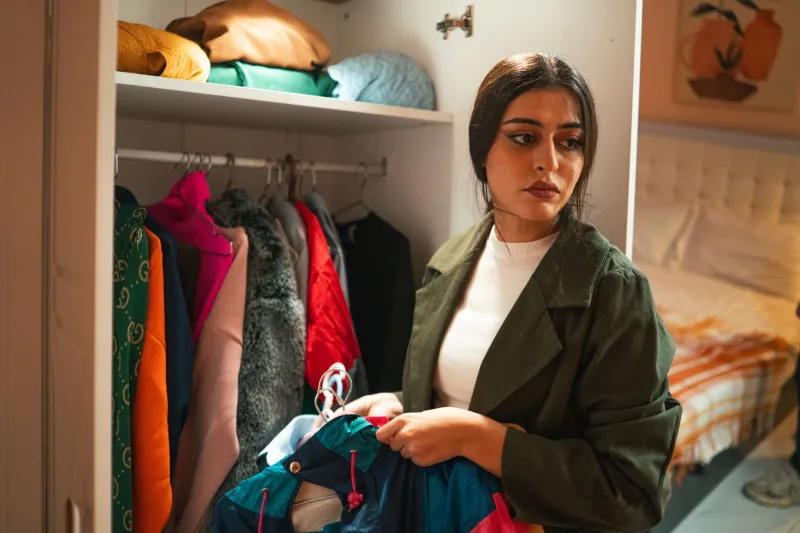
We've been conditioned to think of confidence as a tap you either have turned on or you don't. Some mornings you wake up feeling it — clear-eyed, ready, like you could walk into any room and own it. Those are the easy mornings. The hard ones are when you wake up feeling the opposite: foggy, deflated, vaguely off. And the cultural script for those days is to pull on something comfortable, something low-stakes, something that doesn't ask too much of you.
But here's what that script actually does: it confirms the feeling. When you dress down to match a low mood, you're essentially costuming yourself as someone who isn't quite showing up. And then — because humans are deeply responsive to their own external cues — you spend the rest of the day being that person.
Psychologists call this enclothed cognition, and it's been studied enough at this point to be taken seriously. The clothes you wear don't just signal something to the world. They signal something back to you. They shape how you carry yourself, how you interact, how you think about your own capability in a given moment. Which means on the days you most need a boost, dressing intentionally isn't vanity. It's strategy.
What 'Dressing Intentionally' Actually Means on a Hard Day
This isn't a pitch for suffering through heels when you're already overwhelmed, or for performing some polished version of yourself that doesn't feel authentic. Intentional dressing on a difficult day isn't about looking like you're trying hard. It's about choosing pieces that do specific work for your specific mood.
Start with structure. When everything feels uncertain or chaotic internally, a garment with real shape — a blazer, a fitted trouser, a dress with a defined waist — creates a kind of external order that your nervous system actually responds to. There's a reason people describe putting on a blazer as "snapping into work mode." The structure of the clothing creates a structure in the body, which creates a structure in the mind.
Then consider color, but not in the way you've been told. The instinct on a gray day is to reach for gray clothes. Resist it. You don't have to go full maximalist-rainbow, but a single deliberate pop of something warm — a rust-toned scarf, a pair of earrings in a deep coral, a bag in an unexpected mustard — can interrupt the visual monotony of a low-energy day in a way that's genuinely mood-lifting. Not because color is magic, but because choosing it is an act of intention. And intention, even small, shifts something.
Your 'Armor Outfit' Is a Real Thing — Build One
Every woman who's been paying attention to her own style for long enough has at least one outfit that reliably works. Not just aesthetically, but energetically. You know the one. You put it on and something shifts. Your posture adjusts. You walk a little differently. People respond to you differently, which feeds back into how you feel, which changes how you move through the rest of the day.
This is your armor outfit, and it's worth identifying deliberately rather than stumbling on it by accident. Think about the last time you felt genuinely powerful or at ease in what you were wearing. What were the components? Was it the weight of the fabric? The way the silhouette hit? The specific combination of pieces? Reverse-engineer it. Then build variations on that formula so you have options to reach for when you need them most.
The armor outfit isn't about looking impressive to other people. It's about creating a reliable internal trigger. It's a shortcut to a version of yourself you already know exists — one you sometimes need help accessing.
The Part Where We Talk About Effort (And Why It's Not the Enemy)
There's a lot of cultural noise right now around effortlessness — the idea that the chicest, most evolved version of personal style is one that looks like you barely thought about it. And there's something real in that. Overthinking can kill the joy of getting dressed.
But effort and intention are not the same thing. Effort is performative. Intention is purposeful. When you take ten minutes on a rough morning to actually consider what you're putting on your body — to choose something that will serve you rather than just cover you — that's not trying too hard. That's using one of the tools available to you.
On the days when your internal resources are running low, your wardrobe can pick up some of the slack. That's not a failure of self-confidence. That's just being smart about the resources you have.
Getting Out of Your Own Head and Into Your Clothes
The trap most of us fall into on difficult days is spending too much time in the mirror asking the wrong question. Instead of "does this look good?" — which is a question with no good answer when you're already feeling bad — try "does this feel like the version of me I want to be today?"
That reframe matters. It moves the decision out of the realm of external judgment (which you can't fully control) and into the realm of intention (which you can). You're not trying to fool anyone. You're making a choice about who you're going to be for the next several hours, and then dressing accordingly.
Sometimes the most radical act of self-care isn't a bath bomb or a journaling session. Sometimes it's putting on the good blazer, the earrings that make you feel like yourself, the shoes that make you walk differently — and heading out the door before your mood has a chance to talk you out of it.
Feel it later. Dress first.