The Pieces You Keep Skipping Are Probably the Ones You Actually Need
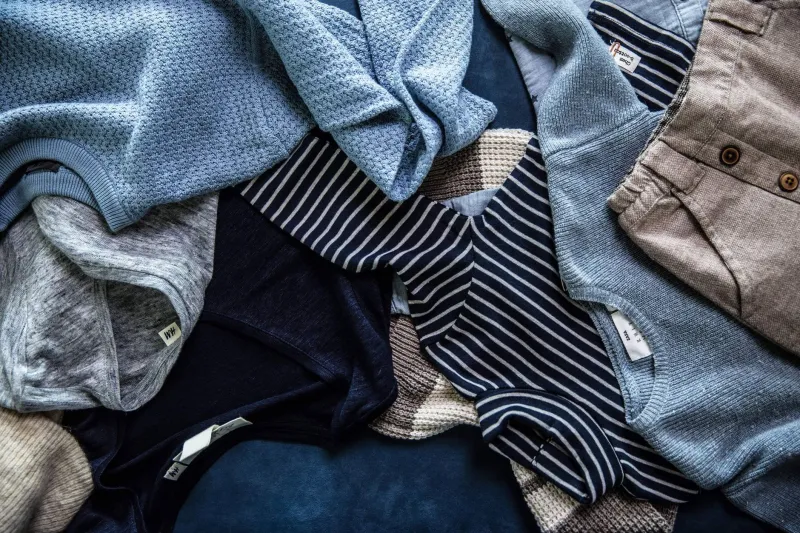
You know the feeling. You're moving through a store — or scrolling, because let's be honest, that's most of us — and something catches your eye. A perfectly draped camel trouser. A white cotton tee with just the right weight to it. A soft, heather-gray crewneck that isn't trying to do anything except exist. And your brain goes: pass.
Not because it's bad. Because it's boring.
Here's the thing about boring: we've been trained to treat it like a flaw. Fashion content rewards novelty. The algorithm loves a statement piece. Nobody's posting a reel about a perfectly cut straight-leg pant in a neutral tone — at least not without some elaborate styling gymnastics to justify the content. And so we scroll past the good stuff, over and over, in search of something that gives us a feeling.
But that feeling? It's often the problem.
The Psychology of the Skip
When we feel nothing toward a piece of clothing, we tend to interpret that as a verdict. Not for me. Not exciting enough. I'd never reach for it. What we're less likely to consider is that the absence of excitement might actually be the piece doing its job correctly.
Timeless basics don't announce themselves. They're not engineered to create a dopamine hit at first glance — they're engineered to work. And because we've become so accustomed to clothing that markets itself through visual novelty, the quiet competence of a well-made essential reads as a negative rather than a neutral.
There's also a subtler thing happening: basics force us to confront our own styling abilities. A wild printed blouse or a sculptural jacket does some of the work for you. A plain white tee? That's all you. The outfit lives or dies on how you put it together, and that can feel vulnerable in a way we don't always want to admit.
So we skip it. We buy the interesting thing instead. And six months later, we're still not wearing it.
The Difference Between Uninspiring and Invisible
Not all basics are created equal, and this is where it gets nuanced. There's a real distinction between a piece that's genuinely uninspiring — wrong cut, bad fabric, nothing redeemable about it — and one that's invisible in the best possible way.
The genuinely uninspiring version makes you feel like you're wearing a placeholder. It's the boxy tee that doesn't quite fit anywhere, the trousers that are technically fine but somehow drain the life out of everything they touch. These pieces exist, and they're worth avoiding.
But the invisible-in-the-best-way version? That's a different animal entirely. It's the piece that disappears into your outfit and lets everything else — your accessories, your other layers, your actual face — take center stage. It's the foundation that makes the whole look feel intentional without screaming for credit.
The test is simple: does the piece make you feel like less, or does it make the rest of your outfit feel like more? The answer tells you everything.
Why Basics Are Actually the Risky Buy
Here's a counterintuitive truth that the fashion industry doesn't particularly want you to internalize: the bold, trend-forward statement piece is actually the safe purchase. It's safe because it comes with a built-in excuse. If you never wear it, you can blame the trend. You can blame the occasion you never had. You can blame the fact that it was just a little too much.
A basic has no such cover. If you buy a perfect white Oxford shirt and you never reach for it, you have to sit with the fact that you own something useful and are actively choosing not to use it. That's uncomfortable. So we avoid the purchase altogether, which is honestly the more expensive long-term move.
Cost-per-wear math is brutal on statement pieces and generous to basics. A $180 cashmere crewneck you wear twice a week for three years has cost you less per outing than a $60 embellished top you wore to one birthday dinner and then quietly exiled to the back of your closet. The math isn't complicated, but it requires us to think past the initial transaction — which is exactly what impulse purchasing is designed to prevent.
How to Actually Shop for Basics Without Losing Your Mind
The problem with basics shopping is that it requires a different kind of attention than regular shopping. You're not looking for something that excites you. You're looking for something that fits correctly, moves well, holds its shape, and photographs slightly worse than it looks in person. (That last one is genuinely a green flag.)
Fabric is the first filter. A basic in a bad fabric is just a bad piece — there's nothing timeless about a thin, pilly cotton tee that loses its shape after three washes. You're looking for weight, recovery, and something that feels like it was made to last. For knitwear, that means real fiber content — wool, cashmere, a quality cotton blend. For trousers, it means something with enough structure to hold a crease but enough give that you can actually move.
Fit is the second filter, and it's more personal than any trend guide will tell you. A basic works because it becomes a canvas, and that canvas needs to be sized for your body, not the body the brand imagined. This is where trying things on — or at minimum, being ruthless about returns — actually matters.
And then there's the gut check: wear it mentally before you buy it. Not to the fantasy occasion, but to your actual Tuesday. Your real Wednesday morning. The errand run, the work call on camera, the dinner where you need to look put-together without looking like you tried too hard. If the piece shows up clearly in that mental image, that's your answer.
Give the Boring Thing a Chance
The most transformative pieces in any wardrobe are almost never the ones that caused the most excitement at purchase. They're the ones that kept showing up — the ones that worked with everything, that traveled well, that made getting dressed feel easier instead of harder.
Those pieces tend to be the ones we almost didn't buy. The ones we held for a second, felt nothing, and nearly put back.
Next time you're standing there holding something plain and competent and quietly excellent, and your brain is telling you it's not interesting enough — pause. Ask yourself if the problem is really the piece, or if it's just that the piece isn't doing any of the work for you.
Because sometimes the most beautiful thing a piece of clothing can do is get out of your way.